



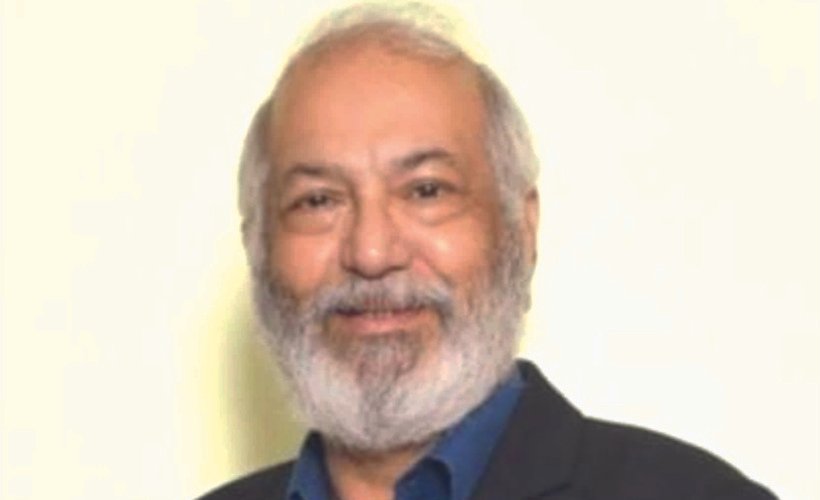
Manguirish Pai Raiker elaborates on the amendments in the MSMED Act; which will facilitate the growth and development of the MSME Sector
The Micro, Small and Medium Enterprises (MSME) sector is a cornerstone of the Indian economy, contributing significantly to employment generation, entrepreneurship, innovation and inclusive economic growth. Recognising the rapidly evolving nature of the sector, the Government has amended the Micro, Small and Medium Enterprises Development Act, 2006 (MSMED Act), to strengthen its legal and institutional framework and create a more enabling environment for MSMEs.
The Micro, Small and Medium Enterprises Development (Amendment) Bill, 2026, was passed by the Rajya Sabha on 3rd August 2026 and subsequently by the Lok Sabha on 7th August 2026. The amendments assume significance as the MSMED Act has completed two decades since its enactment in 2006. During this period, technological advancements, digitalisation, IT-enabled systems and changes in the legal and business environment have transformed the MSME ecosystem. The scale of the sector has also expanded substantially. The number of MSMEs registered on the Udyam portal has increased from 1.65 crores as on 1 April 2023 to 9.16 crores at present. The sector provides employment to more than 40 crores people and remains an important pillar of India’s economic and social development.
A key objective of the amendments is to align the MSMED Act with the contemporary MSME landscape. The classification of enterprises based on the twin criteria of investment in plant and machinery or equipment and turnover has been incorporated into the Act. The amendment also gives permanence to the Udyam Registration Portal as a digital, free and voluntary platform for MSME registration. This will support greater formalisation while keeping registration accessible to enterprises. Delayed payments remain one of the major challenges faced by Micro and Small Enterprises (MSEs), affecting their cash flows and working capital. The amendments seek to strengthen the mechanisms available for resolving such disputes.
An important provision is the introduction of Online Dispute Resolution (ODR), which can enable MSEs to resolve disputes in a timely and cost-effective manner. The amendment also provides greater protection to MSE suppliers by requiring courts to order payment of at least 50 per cent of the awarded amount where an application seeking to set aside a decree, award or order has remained pending for more than six months.
The amended provisions further introduce specific timelines for the resolution of delayed-payment disputes. Mediation is required to be completed within 90 days from the date fixed for the first appearance. If mediation is unsuccessful, the matter is to be referred for arbitration within 30 days. The award is thereafter required to be made within 90 days from the completion of pleadings. These timelines are intended to bring greater certainty and speed to dispute resolution.
The amendments also strengthen the recovery of dues owed to MSEs. A mediated settlement agreement or arbitral award made by the Facilitation Council, mediation service provider or alternative dispute resolution institution under Section 18 may be recovered as an ‘arrear of land revenue’ through the District Collector, Deputy Commissioner or other notified authority in the jurisdiction where the buyer’s assets are located. This provides an additional mechanism to facilitate effective recovery of dues. The amendment places greater emphasis on the Trade Receivables Discounting System (TReDS) as an institutional mechanism for improving liquidity for MSMEs. Central Public Sector Enterprises (CPSEs) will be required to route the settlement of invoices for goods and services procured from MSMEs through a TReDS platform. States are also provided with an enabling mechanism to encourage their Public Sector Enterprises to use TReDS.
The growing importance of the platform is reflected in the increase in invoice discounting through TReDS, from around Rs 40,000 crores in 2022-23 to Rs 3.47 lakh crores in 2025-26. Wider use of the platform is expected to further address delayed payments and provide MSMEs with timely access to working capital.
The amendments provide flexibility to State Governments in determining the composition of Micro and Small Enterprises Facilitation Councils (MSEFCs). This will enable States to establish multiple MSEFCs and facilitate faster disposal of payment-related disputes. State Governments are also empowered to make rules relating to the functioning of MSEFCs, thereby allowing the institutional framework to respond better to local requirements. Another significant aspect of the amendments is the move towards decriminalisation and trust-based regulation. Certain conviction-based penalties under the earlier framework have been replaced with graded civil penalties. For instance, furnishing incorrect information will attract a warning in the first instance, followed by a penalty for subsequent instances. Similarly, provisions relating to non-disclosure by buyers of unpaid amounts, along with interest, in annual accounts have been rationalised through a graded system of warning, penalty and fine depending on the number of instances. This approach is intended to encourage compliance without creating an unnecessarily punitive regulatory environment.
The MSMED Act amendments represent an important step towards creating a stronger foundation for the growth and development of India’s MSME sector. By promoting formalisation, improving access to dispute resolution, strengthening recovery mechanisms, facilitating faster payments and simplifying compliance, the amendments seek to address several long-standing challenges faced by MSMEs.
The reforms are aligned with the Government’s vision of Viksit Bharat @2047, under which a vibrant, competitive and inclusive MSME sector can play a central role in achieving sustainable, employment-intensive economic growth.
By creating a more predictable, digital and trust-based regulatory ecosystem, the amended framework seeks to help MSMEs progress from small enterprises to businesses capable of scaling up and becoming champions of growth. Ultimately, stronger MSMEs will contribute not only to greater ease of doing business but also to India’s broader journey towards a developed and resilient economy.
The writer is the past President of GCCI and Chief Mentor of MSME Aadhar Stambh. Email: rsaawni@gmail.com