




KEEGAN FURTADO highlights how workplaces accidentally train us to reward the people who sound certain
Every office has a Rahul. Rahul has never met a question he could not answer. Quarterly numbers are down? ‘Market sentiment.’ Customers are leaving? ‘Value proposition issue.’ Artificial intelligence is going to change the industry? ‘Absolutely, massive disruption coming.’ Nobody has asked what kind, but Rahul has already announced that there are “three things we need to do”. There are always three things.
Sitting two chairs away is Neha, who has spent six months working on the problem. When the leader turns to her, she pauses. “Well, it depends. There are a couple of things we need to understand first.” She talks about customer segments, gaps in the data and a technology dependency that makes the problem slightly more complicated than Rahul’s three-point plan suggested.
The meeting ends, and near the coffee machine the analysis begins. Rahul was impressive. Confident. Decisive. Good leadership presence. Neha? Technically very strong, but perhaps she needs to be more assertive.
And somewhere, very faintly, a bell rings. Welcome to the Corporate Pavlov Experiment.
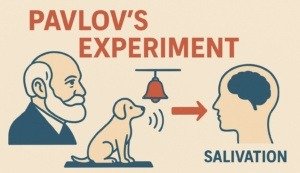 Ivan Pavlov was studying digestion in dogs when he noticed something more interesting. The dogs naturally salivated when food appeared, but over time they began responding to signals associated with feeding. In the familiar version, a sound such as a bell was repeatedly paired with food.
Eventually, the sound alone could trigger the response. The dogs had learnt the pattern.
Corporate life has its own bells. Speak early in a meeting and you receive attention. Speak confidently and you gain credibility. Volunteer for visible work and recognition often follows. Say, “I am not sure yet, I need to examine the data”, and the room may briefly go quiet. Say, “Absolutely, we can deliver that”, and heads begin to nod.
People quickly notice what their environment rewards. A nod from the boss, an invitation to a leadership meeting or a visible assignment can reinforce behaviour perfectly well. If certainty gets rewarded, people learn to sound certain. If visibility brings recognition, people become more visible.
The problem begins when behaviours that look like competence start being confused with competence itself.
This is where the Dunning-Kruger effect becomes interesting. It is often reduced to the idea that people who know little think they know everything. The more useful point is that limited knowledge can make it harder to recognise the limits of that knowledge. Expertise can create the opposite effect. The more you understand a subject, the more variables and unintended consequences you can see.
A beginner sees the road ahead. An expert notices the potholes, the diversion and the bridge that may not be structurally sound. Which is why experience so often produces two deeply unimpressive words: “It depends.” Unfortunately, “it depends” has never enjoyed the same executive presence as “Absolutely”.
Consider the familiar project question: “Can we deliver this in three months?” One person says, “Yes, we’ll make it happen.” Another says, “Possibly, but we should first understand the technology dependencies, capability gaps and customer migration risk.” The first sounds more decisive. Three months later, the second is often invited to the meeting called Project Recovery Plan.
This matters when the same pattern enters performance discussions, talent reviews and succession planning. We say someone has ‘presence’, but what are we actually seeing? Judgement, competence, charisma, communication or simply confidence? The halo effect can add to the problem. Once somebody impresses us in one visible area, we may assume they are equally capable elsewhere.
Before long, Rahul is not merely good in meetings. Rahul is ‘high potential.’ Neha, meanwhile, is encouraged to ‘increase her visibility.’
None of this means confidence is bad. Leaders need it. They must make decisions under uncertainty and communicate clearly. The problem is confusing the performance of confidence with proof of capability.
That is why talent decisions need more evidence and less theatre. ‘Great presence’ should trigger the next question: what has this person actually demonstrated? Look at the quality of decisions, the consistency of outcomes, how someone responds when challenged and whether they can change course when the facts change.
The same applies to succession and performance conversations. A memorable meeting contribution should not outweigh a sustained pattern of judgement. Nor should thoughtful hesitation automatically count against someone. Sometimes the person saying “I need to understand this better” is showing more leadership than the person promising delivery before understanding the problem.
Perhaps executive presence deserves a broader definition too. It can include decisiveness, but also curiosity, listening, judgement and the confidence to admit that the answer is not obvious.
So, the next time Rahul answers before the question has technically finished, by all means appreciate the confidence.
Just do not confuse the sound of certainty with the weight of evidence.
The bell may have been ringing for years. Rahul has simply learnt exactly when the food arrives.