



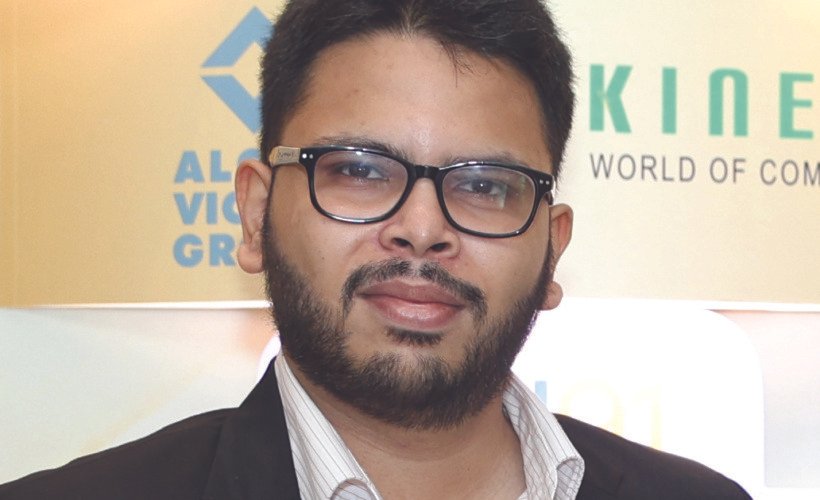
Keegan Furtado elaborates on why people businesses need to rethink themselves before AI does it for them
A few years ago, the newest member of the team usually arrived with a nervous smile, a fresh notebook and an awkward question about where the coffee machine was.
They spent the first week attending inductions, trying to remember everyone’s names and pretending to understand the 57 acronyms that had mysteriously become part of everyday conversation.
Fast forward to today, and your newest colleague is… different. It does not need an induction. It does not ask for a laptop. It has no interest in hybrid working, office parking or whether Friday is a casual dress day. It never forgets its password, never accidentally replies to the entire company, and has somehow mastered Microsoft Excel without watching a single YouTube tutorial. Instead, it quietly logs in and gets to work.
Before you have finished your first coffee, it has screened three hundred CVs, shortlisted the top twenty candidates, conducted first-round screening conversations, scheduled interviews around everyone’s calendars, drafted personalised learning journeys, analysed employee sentiment, summarised last week’s engagement survey and politely asks whether you would also like a report on attrition trends.
It does all of this without once saying, “Sorry, I was on mute.” Which raises a rather uncomfortable question. At what point did artificial intelligence stop being software and start behaving like a colleague?
We have been thinking about AI all wrong
For years, organisations have treated AI like an exceptionally efficient intern. It could write emails. Summarise meetings. Generate job descriptions. Draft policies. Create learning content.
Helpful? Absolutely. Transformational? Not quite.
That version of AI was assisting people. Today’s Agentic AI is beginning to replace entire sequences of work. Rather than completing a task, it completes a workflow. A recruitment agent does not simply shortlist candidates.
It searches multiple talent pools, screens applicants, conducts preliminary conversations, ranks suitability, schedules interviews and nudges hiring managers who have not responded.
Learning agents no longer just recommend courses. They identify skill gaps, build personalised learning pathways, follow up with learners, conduct post-training effectiveness checks and recommend what should happen next.
HR bots answer policy queries, guide employees through processes, initiate workflows and escalate only the conversations that genuinely require human judgement. The intern has quietly become the colleague.
People businesses are facing their biggest reinvention
For decades, businesses built around people have competed by adding more people.
More recruiters. More trainers. More HR partners. More consultants. Growth was often measured by headcount. Artificial intelligence changes that equation entirely. The question is no longer, “How many people do we need?” It is becoming, “What should people uniquely do?”
That is a fundamentally different business model.
The biggest mistake organisations are making
Most businesses are trying to bolt AI onto yesterday’s processes.
“We will use it to write job descriptions.” “We will use it to create training.” “We will use it to answer employee queries.” Useful. Necessary. Completely insufficient. It reminds me of the early days of digital transformation.
We proudly converted paper forms into PDFs.
Then we made people download the PDF, print it, sign it, scan it and email it back. Technically digital. Practically… not so much.
Many organisations are approaching AI in exactly the same way. They are making old processes slightly faster instead of asking whether those processes should exist at all.
The question every CEO should be asking
Imagine you were starting your organisation today. No legacy systems. No inherited processes. No organisational baggage. Artificial intelligence already exists.
Would you design recruitment the same way? Would learning still revolve around scheduled programmes?
Would employees still raise tickets for routine HR queries?
Would managers spend weeks completing performance reviews? Probably not. You would build the organisation around intelligent agents from day one.
Humans would step in where trust, judgement, creativity, coaching and relationships actually matter. Everything else would simply… happen.
The human advantage is becoming more human
Ironically, AI is not making people less valuable. It is making distinctly human capabilities far more valuable. Recruiters become talent advisers rather than CV screeners. Learning professionals become capability architects rather than course administrators. HR becomes organisational consultants rather than policy custodians.
Managers spend less time chasing updates and more time coaching performance.
Artificial intelligence raises the operational floor. Humans raise the strategic ceiling.
The businesses that will win
The organisations that succeed over the next decade will not necessarily have the most sophisticated AI. They will be the ones willing to rethink assumptions that have existed for decades. They will stop asking, “How can AI help us do this faster?” and start asking, “If AI already existed when we founded this business… would we even build it this way?”
Those are very different questions. One improves the past. The other invents the future.
The Bottom Line
People businesses have always believed their greatest asset is people. That remains true. What has changed is that some members of tomorrow’s workforce will not appear on the payroll. They will screen candidates, coach learners, answer employees, analyse data and complete workflows alongside us.
The challenge, therefore, is not deciding where AI fits into the organisation. It is deciding whether the organisation itself was designed for a world that no longer exists. Because AI is no longer asking for a seat at the table.
It has already booked the meeting, written the agenda, summarised the discussion, assigned the actions and sent the follow-up email. Which, ironically, probably means the meeting could have been cancelled after all
The writer is a Deputy General Manager – Talent Development and Learning at Digitide Solutions and is a Certified Practitioner and Life Coach Email: keegan1694@gmail.com