



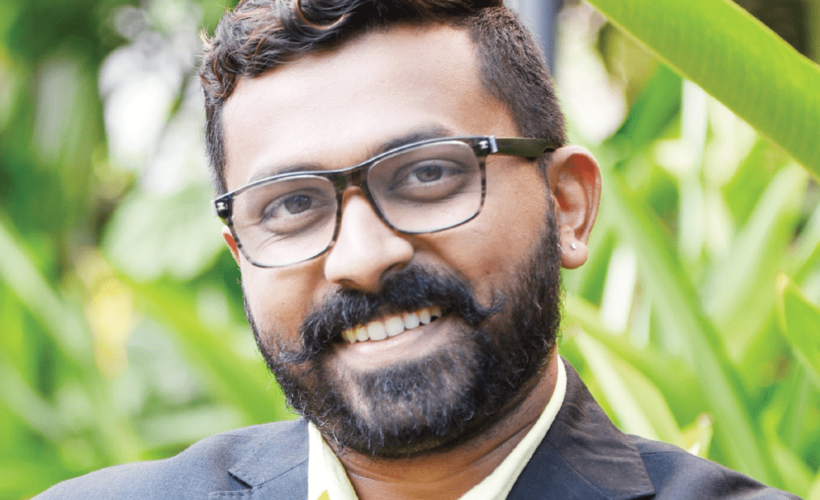
Mangirish Salelkar explains why India needs more businesses and institutions that endure and contribute meaningfully to nation building
India’s entrepreneurial landscape has never been more vibrant. Every day, new ventures are launched, founders chase ambitious dreams, investors seek the next big opportunity, and innovation continues to reshape industries. Startup success stories dominate headlines, funding announcements trend across social media, and valuation milestones are celebrated as symbols of achievement.
But amidst all this excitement, an important question often goes unanswered: What ultimately becomes of these startups?
Starting a business is undoubtedly an achievement. It requires courage, conviction, and the willingness to embrace uncertainty. However, entrepreneurship should not be judged solely by the ability to launch a venture. The true measure of success lies in what that venture evolves into over time.
Today, India proudly stands as the world’s third-largest startup ecosystem. The country has produced numerous unicorns, attracted global capital, and inspired a generation of aspiring entrepreneurs. This momentum has been transformational, democratising ambition and creating opportunities that were unimaginable a decade ago.
Yet, while we celebrate beginnings, we often pay insufficient attention to sustainability. Many startups achieve initial visibility but struggle to survive beyond the early years. Some are built around funding cycles rather than business fundamentals. Others focus heavily on rapid scaling while overlooking profitability, culture, customer trust, or long-term value creation. In the race to grow quickly, longevity sometimes becomes an afterthought.
Perhaps it is time to broaden our perspective. Instead of asking entrepreneurs only what they are building today, we should also ask what they aspire to become twenty years from now.
This is where the idea of an ‘EndUp’ emerges. An EndUp is not a company that has reached its conclusion. Rather, it is a business that has successfully evolved beyond its startup phase. It has weathered challenges, adapted to changing markets, and established itself as a trusted institution. It is no longer defined by its launch, its funding round, or its valuation. Instead, it is defined by the value it consistently creates.
An EndUp generates meaningful impact through multiple dimensions. It creates products and services that solve real problems. It provides dignified and sustainable employment. It builds a culture that survives beyond the founding team. It continues to innovate year after year. Most importantly, it contributes to the economic and social development of the communities it serves.
These organisations may not always dominate headlines, but they become the backbone of strong economies.
India today stands at a pivotal moment in its development journey. We possess a young and energetic workforce, world-class digital infrastructure, growing technological capabilities, and an increasingly entrepreneurial mindset. The foundations are strong. The challenge now is transforming entrepreneurial energy into enduring institutions.
History offers many examples of businesses that quietly shaped modern India. They survived economic downturns, policy shifts, technological disruptions, and changing consumer behaviour. They were not built for short-term applause. They were built with patience, resilience, and a long-term vision. Over decades, they evolved into trusted brands, major employers, and contributors to national growth.
This is the model that the next generation of entrepreneurs should aspire towards. Real entrepreneurial success cannot be measured only by the size of a funding round or the speed of an acquisition. It should also be measured by the number of livelihoods created, the trust earned from customers, the strength of organisational culture, and the positive impact delivered to society.
As an ecosystem, we must also reconsider what we celebrate. Fundraising deserves recognition, but so does profitability. Rapid growth is important, but so is resilience. Innovation matters, but so does execution. Valuations have their place, but value creation should remain the ultimate objective.
The media, investors, educational institutions, mentors, and industry bodies all play a role in shaping entrepreneurial aspirations. By highlighting stories of sustainable businesses alongside stories of explosive growth, we can encourage founders to think beyond short-term milestones and focus on long-term significance.
For aspiring entrepreneurs, the message is simple: start with ambition, but build with intention. Ask not only how to disrupt a market, but how to serve it sustainably. Ask not only how to secure the next round of investment, but how to create a business that can thrive independently. Think not only about growth, but about legacy.
India certainly needs more startups. But even more than that, India needs more EndUps – businesses that endure, institutions that inspire, and enterprises that contribute meaningfully to nation-building for generations to come.
Because the true success of entrepreneurship is not merely in starting up. It is in what you eventually end up becoming
The writer is is the Founder President, Goa Technology Association and CEO & Co-Founder, UMANG Group. Email: mangirish@umangsoftware.com