



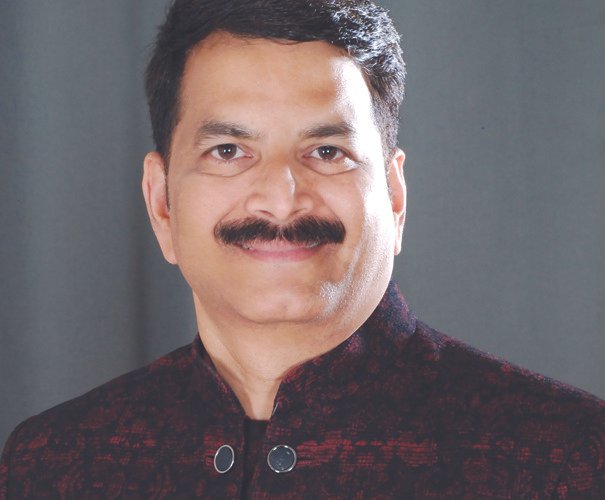
Mahesh Pai explains how longer life expectancy is retirement economics, challenging traditional assumptions about wealth, income, and financial security
A few generations ago, retirement was relatively simple. People worked hard, raised families, accumulated some savings, and hoped to enjoy a few years of rest before life’s journey came to an end. Financial planning was typically undertaken closer to retirement and was designed to support a post-retirement life that was expected to last perhaps ten to fifteen years.
Today, that reality has changed dramatically. Advances in healthcare, nutrition, sanitation, and medical science have gifted us something previous generations could only dream of − a longer life. While this is undoubtedly one of humanity’s greatest achievements, it has also created a challenge that few families are adequately prepared to address.
Who pays for a life that lasts 90 years or more? The question may seem uncomfortable, but it is becoming increasingly relevant. While society has made remarkable progress in extending life expectancy, our financial habits and retirement planning assumptions have not evolved at the same pace.
For many individuals, the greatest financial risk is no longer dying too early. It is living too long.
The Retirement Equation has Changed – Consider the traditional retirement model. A person retired at 60 and expected to live until 75. Retirement planning therefore focused on generating income for approximately fifteen years.
Today, a healthy sixty-year-old may reasonably expect to live into their late eighties or even beyond ninety. This effectively doubles the duration that retirement savings need to support a person’s lifestyle.
Retirement is no longer a short phase of life. For many, it has become an entirely new chapter spanning twenty-five to thirty years.
Yet many retirement plans continue to be built using outdated assumptions. People calculate how much they need to retire but often underestimate how long that money must last. The result is a silent but significant risk: Outliving one’s financial resources.
Time is the Real Cost – When discussing retirement, most people immediately think about healthcare expenses. Medical costs are certainly important, but they are not always the biggest threat.
The greater challenge is often the cumulative cost of ordinary living. Food, electricity, transportation, home maintenance, domestic assistance, communication services, travel, and countless other daily expenses continue year after year. Inflation quietly increases these costs, often at a pace that exceeds expectations.
A monthly expense that appears manageable today may look very different twenty years from now. The danger is not a single large expense. The danger is the relentless repetition of normal expenses over decades. Longevity amplifies every financial decision because it stretches the timeline over which those decisions must perform.
The Changing Family Equation – For centuries, families functioned as informal retirement systems. Parents invested in their children, and children, in turn, provided support to aging parents.
That social contract is changing. Families are smaller. Children often pursue careers in different cities or countries. Dual-income households face their own financial pressures, including housing costs, education expenses, and retirement planning challenges.
Many parents assume their children will be available to provide support if needed. Many children assume their parents have already secured their retirement. The assumptions on both sides are often unspoken. As life expectancy increases, these assumptions can create financial and emotional strain for families that have not planned ahead. The reality is that financial independence in retirement is becoming more important than ever.
The Reality of Goa – In Goa, this conversation takes on an interesting dimension. Many families possess significant wealth in the form of ancestral homes, land, or inherited property. Rising real estate values have transformed modest family holdings into substantial assets on paper. Yet financial security is not determined by asset values alone.
A family may own property worth several crores while struggling to generate sufficient monthly income to maintain its desired lifestyle. Property requires maintenance. It may not produce regular cash flow. Emotional attachment often makes monetisation difficult. Multiple heirs can further complicate decision-making.
This creates a contradiction that is increasingly visible across Goa: Families who are asset rich but income constrained.
As people live longer, the distinction between wealth and liquidity becomes critically important. An impressive balance sheet does not automatically guarantee a comfortable retirement.
Redefining Retirement Planning – Perhaps the biggest mistake people make is viewing retirement as a destination. Retirement is not an event. It is a financial journey that may last three decades. The question should no longer be, “How much money do I need to retire?”
A better question is, “How many years of financial independence am I trying to fund?” This shift in perspective changes everything. It encourages individuals to think beyond investment returns and focus on sustainability, cash flow, inflation, healthcare, and long-term resilience. It transforms retirement planning from a calculation into a strategy.
A Gift and a Responsibility – Living longer is a blessing. It allows us to spend more time with loved ones, pursue passions, contribute to our communities, and experience life in ways previous generations could not.
But longevity comes with responsibilities. Every additional year of life has an economic consequence. The challenge facing today’s retirees is not simply accumulating wealth. It is ensuring that wealth can sustain independence, dignity, and choice throughout a much longer lifespan. Medical science has given us the possibility of living longer. Financial planning must now ensure that we can afford to do so. The question for every family is no longer whether they will grow old. The question is whether their finances are prepared to grow old with them
The writer is an investment consultant and business coach. Email: mahesh@maheshpai.in