



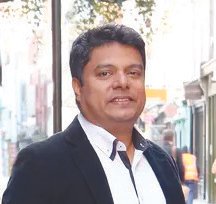
Samir Mardolker suggests that real progress won’t come from new ideas brought into Goa, but from presenting Goan traditions in a way the world can understand and appreciate.
Real breakthroughs in 20026 will not come from importing new ideas into Goa; but from reframing time-tested Goan practices:. Here’s a list of some:
- Fresh Fish – ‘Farm-to-Table Coastal’
For decades, we have had the same morning scene: A fisherman lands the catch at the jetty, the fish reaches the local market, and by lunch it is on someone’s plate with rice, curry and a squeeze of lime.
In Goa we just called it: ‘poilo dhaarm hunntat – fresh ah.’
Today, global diners understand a different language: farm-to-table, hyperlocal sourcing, traceability, sustainable coastal food systems.
Same practice. New vocabulary.
A Goan restaurant that simply writes ‘fresh fish’ looks ordinary.
Call it ‘daily boat-to-table coastal menu, sourced from small-scale Goan fishers’ and suddenly it sounds like what it truly is: a world-class sustainable food story.
Path-breaking idea for 2026: Don’t change the practice. Change the story around it.
- Susegad– ‘Regenerative Work Culture’
The world thinks susegad means lazy. Goans know it’s about having a rhythm: work hard, then pause, breathe, connect, live.
Globally, companies are paying consultants for: burnout prevention, regenerative workplaces, deep work over busywork.
In Goa, we have been practising versions of this forever:
- Shops that shut for a proper afternoon break.
- Work that stops for a funeral, a feast, a football match, a family crisis.
- Time is viewed through people, not just productivity.
Imagine a Goan company saying: “We run a regenerative work culture designed around focused work in the morning, real rest in the afternoon, and collaboration in the evening.”
Sounds like a Harvard case study. In reality, it is structured susegad.
Path-breaking idea for 2026: Design work like a Goan day – and brand it as a regenerative productivity system.
- Udhaar and Bar Tabs – ‘Trust-led Fintech’
Long before apps and credit scores, Goa ran on udhaar.
- The local bar lets you keep a tab.
- The kirana store writes your name in a notebook.
- Bills are settled when money comes in, not when the month ends.
Globally, 2025 was the year of: relationship-led lending, social credit, community-based finance.
In simple terms, the world is trying to digitise what Goan villages already do: trust first, transaction later.
A Goan fintech could easily say: “We are turning the bar-tab and kirana-udhaar culture into a formal, fair, digital trust-led credit system for small businesses.”
Same instinct. New rails. New vocabulary.
Path-breaking idea for 2026: Turn handwritten trust into digital products – without losing the human logic behind it.
- The Balcão – ‘Community Co-Design Lab’
Every Goan house with a balcão knows this: it’s more than architecture.
It’s a social interface.
- Neighbours drop by.
- Politics, jobs, weddings, school admissions, ideas – all get discussed.
- Problems are solved in conversation, not in formal meetings.
Globally, businesses pay for: community panels, co-design labs, citizen insight sessions.
In Goa, the balcão has always been the original listening post.
Now imagine a Goan entrepreneur reframing it: “We use the balcão as a community co-creation platform – to test ideas, refine services, and build products rooted in real life.”
That is not romantic. That’s R&D in plain clothes.
Path-breaking idea for 2026: Treat your informal listening spaces as strategic assets – and call them what they are in business terms: community insight systems.
Underneath it All: Seven Old Feelings
Across all these examples, the business models are different.
But the emotional foundations are the same: Trust. Empathy. Fairness. Reciprocity. Belonging. Simplicity. Intuition.
These seven are Goa’s silent superpower.
- Trust makes udhaar possible.
- Empathy makes susegad humane, not selfish.
- Fairness keeps tabs and prices honest.
- Reciprocity builds give and take.
- Belonging turns the balcão into a safe space.
- Simplicity keeps processes light.
- Intuition tells you whom to trust, where to buy, when to push, when to pause.
Globally, companies are now spending big money to rediscover these seven.
Goa never fully lost them.
The opportunity is not to import new models, but to re-language what we already do so that the world, and our own youth, can see its value.
A December Resolution for Goan Businesses
So as we enter the peak of the holiday season, with visiting cousins, returning expats, tourists, weddings, packed beaches, quiet villages and full churches, here’s a simple business resolution for 2026: Don’t ask: “What new idea can I import?”. Ask: “Which old Goan practice can I reframe, redesign and rename for the world?”
If it sounds ordinary in Konkani, try saying it in investor language.
- Fresh fish – boat-to-table coastal dining.
- Susegad – regenerative work design.
- Udhaar – trust-led micro-credit.
- Balcão – community co-design lab.
The practice is local. The language is global. The opportunity is massive. Because the future of business is not just about new technology. It is about ancient human needs, delivered with modern intelligence. And on that front, Goa is not catching up. Goa is the reference point.