



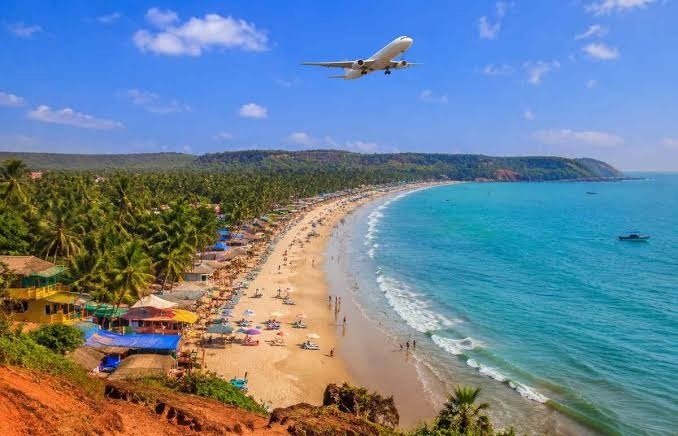
From mandatory coastal regulations to earlier foreign charter landings, Goa’s multi-pronged strategy balances local business continuity with global market diversification for the upcoming season
Aligning the Travel Ecosystem
As the regional tourism season approaches, Goa has initiated comprehensive, state-wide preparations to welcome visitors, backed by proactive administrative reforms and strong commercial interest from established and emerging global markets. State authorities, local entrepreneurs, and international travel trade partners are systematically aligning their operational strategies to ensure a seamless kickoff for the 2026–27 season. From regulatory adjustments for coastal micro-enterprises to an expanded international charter flight network, Goa’s travel ecosystem is setting the stage for significant seasonal momentum and sustainable economic growth.
Policy Continuity and Ground Readiness
At the core of local administrative readiness is the strategic extension of the existing Beach Shack Policy by another year ahead of the upcoming season. The Goa Tourism Department announced that it would begin issuing beach shack licences from September 10, ensuring that local operators have sufficient operational runway to assemble their beachside establishments without facing bureaucratic delays. By keeping the fee structure unchanged, state leadership aims to provide fiscal continuity and business stability across coastal communities.
Tourism Minister Rohan Khaunte emphasized the broader socio-economic significance of this policy continuity:
“The beach shack is an integral part of Goa’s tourism identity and an important source of livelihood for thousands of people. Extending the policy and keeping the fee structure unchanged gives operators the stability they need to prepare for the season.”
Echoing this proactive approach, Tourism Director Kedar Naik highlighted the operational advantages of moving the administrative schedule forward to support seasonal commerce: “It will give operators the opportunity to get their establishments ready well in advance. They will also get the Ganesh Chaturthi weekend to welcome and cater to tourists.”
Strengthening Coastal Governance Frameworks
Parallel to these operational timelines, regulatory oversight along the coast is being significantly reinforced. Under the newly enacted Goa Registration of Tourist Trade (Amendment) Act, 2026, registration with the Tourism Department has been made strictly mandatory for private shacks operating within Coastal Regulation Zone (CRZ) areas. This legislative measure brings previously unregulated coastal establishments into a unified state compliance framework, elevating hygiene, environmental protection, and safety standards across the board.
The International Charter Influx
Complementing these ground-level policy measures is a strong, early revival in international charter traffic. Goa’s foreign charter season for 2026–27 is launching earlier than historical norms, with the first foreign charter flight from Russia scheduled to land at Dabolim International Airport in Vasco on September 30, carrying 438 passengers. Foreign charter flights from Russia typically begin arriving in the first week of October, making this year’s early September arrival a notable indicator of robust advance booking demand. State projections indicate that Goa will host approximately six Russian charter flights per week from key industrial hubs such as Yekaterinburg and Moscow, with flight frequencies set to rise as the peak winter season progresses.
Leading tour operators managing long-haul inbound transit report favorable early metrics across the Commonwealth of Independent States (CIS) and surrounding regions. Sheikh Ismail, Senior Vice-President of Concord Exotic Voyages, observed that the season is beginning under highly favorable market conditions. His firm, which manages extensive charter itineraries from Kazakhstan, Uzbekistan, and Belarus, expects charter operations from Kazakhstan to land in Goa starting October 23. Concord Exotic Voyages alone anticipates bringing more than 45,000 tourists from the CIS region during the 2026–27 cycle, operating up to nine flights weekly from Russia during peak periods alongside expanded routes from Kazakhstan.
Projected Inbound Growth and Market Expansion
Broader sector projections across international source markets reinforce this growth trajectory. Ernest Dias, Chief Operating Officer of TCI and SITA, estimates that the full season running from October 2026 through April 2027 will see an overall 8% to 10% increase in international charter flights compared to the 2025–26 season, which previously saw roughly 302 charter flights across Goa’s two international airports. Established source markets including the United Kingdom, Russia, Kazakhstan, Uzbekistan, and Poland continue to anchor seasonal arrivals. Major British travel operator TUI is scheduled to run four weekly charter flights between November and March—splitting operations equally between Manchester and London Gatwick—delivering roughly 1,200 European visitors to the state each week. Simultaneously, active diplomatic and travel trade discussions are underway to introduce direct charter connections from emerging source markets such as Belarus, Armenia, Moldova, and Bishkek in Kyrgyzstan.
This expansion across Eastern European and Central Asian corridors highlights the resilience of Goa’s brand equity abroad. Travel trade representatives note that the ongoing Russia-Ukraine war has not impacted charter operations from post-Soviet nations as severely as initially feared. Industry leaders credit sustained joint promotional roadshows, conducted collaboratively by private travel companies and the Goa Tourism Department, with maintaining foreign consumer interest and protecting long-haul tourist volume.
This global pivot is part of a deliberate government narrative to broaden the state’s commercial baseline, as highlighted by Tourism Minister Rohan Khaunte, “Our focus on diversifying tourism beyond beaches through heritage, spirituality, wellness, adventure, hinterland experiences and sustainable tourism is resonating with international travellers.”
Air Mobility Dynamics and Route Connectivity
While long-haul group charter arrivals continue to trend upward, tourism associations acknowledge that increasing the volume of foreign Free Independent Travellers (FITs) remains an ongoing commercial challenge. Point-to-point transit disruptions caused by past international and domestic flight cancellations have previously restricted onward connectivity within the Indian subcontinent. Addressing these air mobility bottlenecks, Nilesh Shah, former President of the Travel & Tourism Association of Goa (TTAG), pointed out that several recently cancelled domestic routes connecting Goa are scheduled to be reinstated by major domestic carriers like IndiGo and others as part of their upcoming winter flight schedules, which will restore crucial transit links for independent international arrivals.
Commercial Outlook for the 2026–27 Season
Ultimately, Goa’s multi-layered approach to the 2026–27 tourist season illustrates how regional destinations can leverage clear regulatory frameworks and targeted international outreach to build economic resilience. By offering regulatory stability to local beach shack operators, enforcing environmental compliance, and expanding direct air access across core and emerging global markets, the state is safeguarding its coastal heritage while positioning itself as a high-yield destination. The coordinated alignment between government bodies, airline networks, and travel trade stakeholders promises to deliver substantial economic benefits across hotels, regional transport networks, local guides, and allied enterprises throughout the high-demand winter months.