



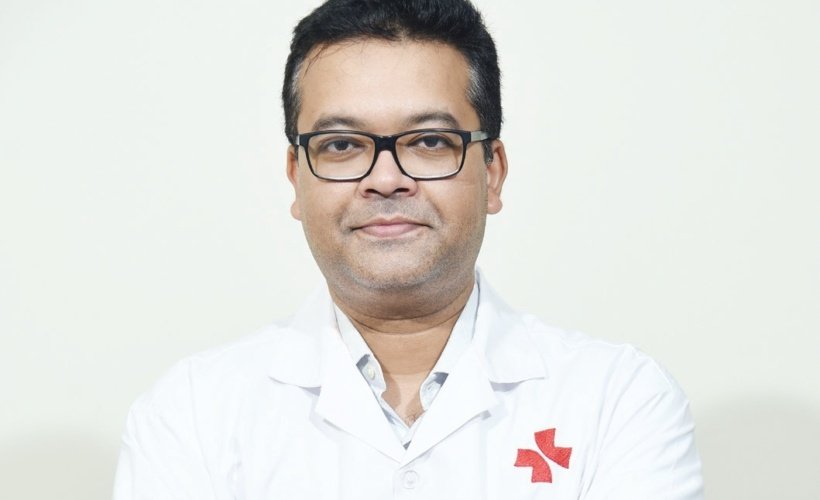
From saving lives in critical moments to pioneering advanced spinal techniques, Dr Antonio Figueiredo shares his journey, philosophy, and vision for healthcare in Goa
Medicine is often described as a mix of science, art, and raw human emotion. Few fields encapsulate this delicate balance as intensely as neurosurgery, where decisions are measured in millimeters and moments can dictate a patient’s future.
Dr Antonio Figueiredo, Senior Consultant Neuro & Spinal Surgeon at Victor Hospital in Malbhat, Goa, has spent over two decades navigating these high-stakes scenarios. With qualifications including an MBBS and a DNB in Neurosurgery, his journey reflects a deep dedication to his craft and a profound commitment to the community he serves. Here is a look inside his career, clinical philosophy, and vision for the future of neurosurgical care.
Every medical career begins with a spark. For Dr Figueiredo, that inspiration was rooted in observing the transformative power of compassionate care during his youth.
“When I was younger, I came across many dedicated doctors who were working so hard to treat the sick and disabled,” he recalls. “I was very impressed by how much of a difference they could make in making a sick person better. The joy and happiness that this brought to so many families really touched me.”
Seeing the love and respect families showered on those physicians planted the seed. He knew early on that he wanted to dedicate his life to making that same tangible difference.
During his foundational MBBS training at Goa Medical College, Dr Figueiredo noticed a stark reality – a tragic number of young lives were being lost to head and spinal cord injuries from accidents, paired with a severe shortage of neurosurgeons in the region.
The realization hit hard. “I noticed that neurosurgery is a branch where you can give a patient; who would have a sure death without surgery, a second chance to live his life,” he explains.
That drive to grant second chances led him to Lilavati Medical Research Centre and Hospital in Mumbai for his DNB training. Exposure to cutting-edge techniques and international collaboration shaped his approach to high-stakes surgeries. Crucially, he trained under world-renowned neurosurgeon Dr. P. S. Ramani, who imparted not just surgical nuances, but deep clinical wisdom that continues to guide his hands today.
With 21 years of cumulative experience across diverse healthcare settings in India, Dr Figueiredo finds returning to his roots in Goa deeply rewarding.
“In Goa, we are blessed to have a good doctor-patient relationship,” he notes. “The patients understand their conditions easier. The love and gratitude shown by our patients is the best motivation to continue working. I enjoy my work here, and I consider it a privilege that I can take care of my own people where I was born and brought up.”
Treating complex conditions, from degenerative spine issues to cranio-vertebral junction anomalies and brain vascular diseases; demands strict adherence to international standards and continuous technological adoption.
When choosing between traditional and minimally invasive procedures, the objective remains clear: follow established guidelines while maximizing patient comfort and speeding up recovery. Whether employing microscopes or endoscopes, the goal is minimal disruption to healthy tissue.
Modern technological advancements have dramatically boosted safety in high-risk cases:
Neuronavigation (GPS): Acts as a high-precision navigational system, aiding spatial orientation when operating on complex brain and spine anatomy.
Intraoperative Neuromonitoring: Tracks spinal cord signals in real time during surgery, alerting the team to potential neural distress before damage occurs.
In emergency settings like acute brain or spinal trauma, protocol takes over instantly. The team prioritizes the primary ABCs – Airway, Breathing, and Circulation. Once stabilized, an urgent CT scan pinpoints any internal bleeding while blood work and surgical prep happen simultaneously.
Facing brain or spine surgery is inherently terrifying for patients and their families. Blending technical accuracy with genuine empathy is essential to easing that burden.
Dr Figueiredo prioritizes clear communication. He explains the condition, discusses all available treatment paths; favoring non-surgical options whenever viable; and clearly outlines surgical options along with potential risks. Reassurance comes naturally through open dialogue and a proven track record.
Because he has practiced in Goa for so many years, many new patients arrive referred by former patients who faced identical diagnoses and recovered. Seeing real-world recoveries built on trust helps diffuse anxiety before surgery even begins. Neurosurgical care in Goa continues to evolve rapidly, reaching parity with international standards. Today, Victor Hospital treats local residents alongside international patients and Non-Resident Indians (NRIs) seeking world-class surgical care at a fraction of global costs.
Looking ahead, Dr Figueiredo envisions expanding both clinical capabilities and medical education in the region, “Our vision is to continue bringing the latest treatment options and facilities to our patients in Goa and beyond. We also plan to establish an active training program for the next generation of students from India and abroad through hands-on workshops and advanced courses.”
By combining state-of-the-art technology, ongoing research on spinal and brain tumors, and a patient-first ethos, Dr Antonio Figueiredo continues to advance neurosurgical care, giving patients not just expert treatment, but a renewed lease on life.