




NANDINI VAIDYANATHAN highlights how business books cultivate structured thinking, sound judgment, and risk mitigation when navigating real-world entrepreneurial crisis
Interesting question. I will draw a parallel from a personal experience. One day my daughter argued that formal education is useless and does not teach you anything useful. Nor does it equip you with skill for life. Six months later, she was scuba diving in Pondicherry and drifted far away from the mother boat with a very strong current. Her scuba buddy was the diving instructor who ran a dive shop in Pondicherry. He panicked and started to give up, including wanting to remove his diving equipment.
My daughter did not panic; she systematically thought through the whole catastrophe looking for a way out, for more than 4 hours, in the middle of the ocean, until the Coast Guard rescued them. This is how she explained it to me: Mama, he panicked and said good bye to his wife and son. I said I have to go back to my mother, so I have to focus on three things. One is how to stay in the sea without drifting far away from Pondicherry, because then you get into Sri Lankan waters and you don’t know what can happen. Two, we have to trust that the boat guys would have contacted the Coast Guard and alerted them to rescue us. Most important, we have to consciously decide to keep our heads and not panic.
So I asked her, how come your thought process was different from your much older, more experienced guide? And she said, what is the use of my Master’s degree if it doesn’t teach me how to think and decide? Bingo!
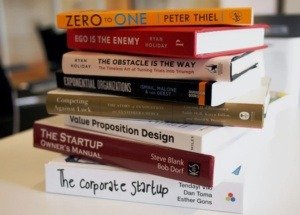 Business books are exactly the same. Reading them is supposed to teach you to think and make constructive decisions. According to Indian Epistemology, there are four ways of acquiring knowledge:
• Pratyaksha
• Anumana
• Upamana
• Shabda.
Let’s see what each one refers to.
Pratyaksha: It literally means ‘before the eyes’ or watching something unfold right in front of your eyes. In other words, from direct experience. Eg, you hired someone without doing due diligence on his background, without checking his credentials from his previous employers. Six months’ down the road, your team found him passed out on the bathroom floor, dead drunk. Then you came to know he was a chronic alcoholic and had been fired from his previous companies for this reason. You then swore that you will never ever hire again without a thorough background check-up. You acquired this knowledge from your own experience of watching this unravel in front of your eyes.
Anumana: It means inference, or drawing a conclusion, based on facts. The science of Logic says you can infer or deduce in two ways. Start from general, deduce particular. Or start from particular and apply it to the whole universe. E.g. Take the famous syllogism, all men are mortal. A is a man. Therefore A is mortal. This is from general to particular. This is called Deductive Logic. The other is particular to general. This dolphin is friendly. I have met friendly dolphins everywhere. So all dolphins are friendly. This is called Inductive Logic. Drawing a leaf from the Pratyaksha example, I hired A without doing background check and he turned out to be alcoholic. Doing background check is vital. Therefore I will never hire without doing background check.
Upamana: It means Comparison. If we stay with the same example, you checked out the experience of your friends from other organizations who hired people in a hurry, without doing thorough background check, and came to know that there was always a problem with the hire. So now you have learnt by comparison, not by your own experience, that doing background check is vital before hiring.
Shabda: It refers to Testimonial. If for instance Steve Jobs said that the customer is an idiot and doesn’t know what he wants, you believe it because Apple gave its customers, products that they never even knew they wanted. Because you believe in Steve Jobs’ expertise, you will try to emulate him in your company too.
 Business books incorporate all four tools. When I was invited by Embassy Books to write a book on Entrepreneurship in 2011, I was very clear I wasn’t going to write a book based on secondary and tertiary research. It had to be a product of my own mentoring experience. By then I had mentored more than 500 entrepreneurs across the globe; and I had practically demonstrated how risk-mitigating it was to engage with a mentor who could take an idea from your head to the market.
Entrepedia incorporated all four tools. My own experience as a mentor, data-based inference on what should and should not be done while building business around an idea, comparison between mature entrepreneurial economies and a nascent one. And it was the testimonial of someone who had mentored over 500 entrepreneurs across domains, demographics and cultures. And with more experience, I updated it in the second edition in 2015.