



NANDINI VAIDYANATHAN writes on how nomad markets keep our culture alive
When Harsh asked me if I could write on nomadic entrepreneurs who sell their wares in village fairs, the first name that came to my mind was Manmohan Desai, the Bollywood director who made village fairs famous because they were always the scene of one of the two brothers getting lost, the mother weeping copious tears even as she sings a family song, which decades later will be instrumental in uniting the family together!
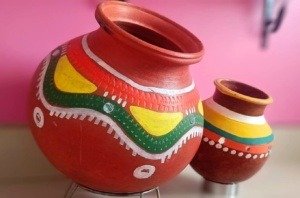 Until I started to research for this column, I did not know that there was something called a Nomad Festival Market (NMF). As a child in urban Bangalore, I remember the Banjarans selling their wares from footpaths, any open space, or sometimes even door to door. The first time I bought something from a nomad community was a beautifully painted earthen pot which is a must-have for Pongal, on the Bangalore – Chennai highway. The pot signifies abundance and since Pongal is the festival of harvest, the pots are decorated with artistic elan to signify different elements of the harvest, a paddy field (since Tamil Nadu is a rice-growing state), a diya, some vermillion, sometimes even a cup of ghee.
The typical characteristic of the NMF is impermanence. They are set up only during a run-up to and until the day of the local festival. The second typical characteristic is that they are all hand-made. They may be pot and pans, woven bags, hand-knitted stoles, decoration items, hosiery, rugs and blankets, street food, masalas, and sometimes even soaps. The third typical characteristic is that they don’t cost an arm and a leg. I have heard cynics say that they are cheap because their quality is poor. But in all these years, in all the variety of products I have bought from NMF, I have never had a quality complaint. And the fourth typical characteristic of NMF is that they occur may be just once, maximum, twice a year.
But the most typical and to my mind, the most endearing characteristic of NMF is that they are community and culture led. All the family members belonging to the community, sharing a culture, participate in it together, including newborn babies. I once asked a Changpa tribal if she missed not staying in one place. Her answer I guess sums up why NMF is so long-lasting and popular. She said – and I am paraphrasing – if we stayed in one place, how would we know of the world and how would the world know of us? Touché!
Years ago, in a small village called Chipping Camden in the Cotswolds in the United Kingdom, I discovered something called a flea market which was set up every Monday. This was a mutant of NMF in that it wasn’t for a festival, it wasn’t for hand-made wares, it wasn’t even by nomadic tribes. The phrase ‘flea market’ is a literal translation of the French ‘marché aux puces’, which means market of fleas. These markets sold used furniture, clothes and woolens in Paris on the roadside, at dirt prices, and because they were second hand and because they were mostly sold by the disadvantaged communities, they were supposed to be full of fleas!
The modern version of NMF of course are pop-ups in apartment complexes or public spaces, or in art schools, where artisanal wares such as customized passport covers, key chains, potted plants, block printed clothes and textiles, decoration items, puja items, wall paintings, coasters, etc (and this list is endless) are sold. This could be for a day, a week or even a month. Chitra Kala Parishath in Bangalore which is an art school hosts such fairs so regularly that they have become calendarized!
The main difference between a traditional NMF and the modern pop-up is that the latter, by virtue of being boutique, may sell premium wares. And they have a large variety of wares to cater to different customer profiles.
My favourite story of NMF comes from Goa and I once heard the former Chief Minister of Goa, Manohar Parrikar narrate this. He hailed from a small village in Goa called Parra, hence the name Parrikar. His village was famous for water melons that were huge in size and juicy and sweet. A farmer from Parra used to hold watermelon festival after every harvest and give away the biggest watermelons, free of cost to the villagers. Years later when Parrikar went back to Parra, he found that the farmer’s son had continued with the tradition but the watermelons had shrunk in size and were not as juicy and sweet. And in that reason lies the tale.
Earlier, the farmer distributed the biggest watermelons in fairs, the villagers ate the fruit and dispersed the seed. Since the seed was of a large and juicy watermelon, the fruit that these seeds bore were the same. Now the son decided to sell the big fruits outside and the small insipid ones were distributed free of cost in the watermelon festival. The villagers ate the fruit and dispersed the seeds. But since the seeds were of a smaller, insipid watermelon, the fruit the seeds bore were also small and insipid. And over time, watermelon stopped growing!
NMF is all about artistry, community and culture. They are an informal, yet extremely important form of perpetuating the best in tradition. There are not status symbols or conversation pieces. Here’s wishing that the old version thrives along with the modern reincarnations.