


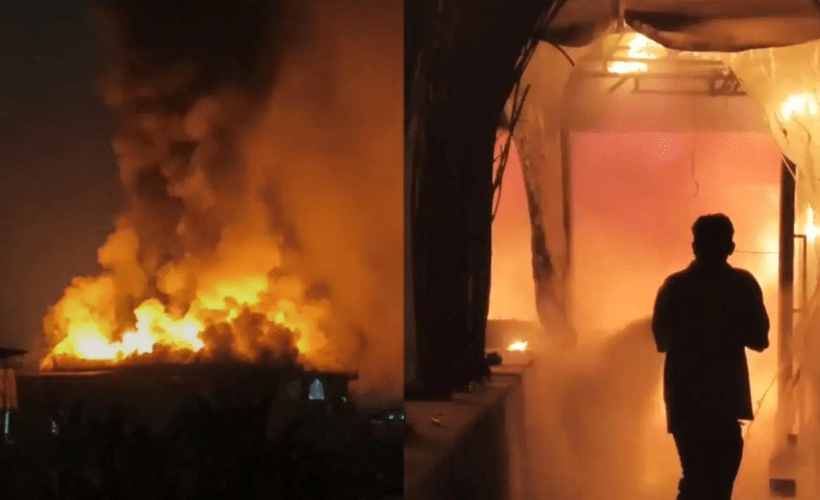
How the Arpora nightclub tragedy exposed the depth of regulatory collapse in Goa.
The revelations emerging around the Birch by Romeo Lane nightclub in Arpora have cast an unflattering light on the regulatory environment that governs Goa’s booming nightlife industry. What stands exposed is not simply the negligence of one establishment, but a wider and deeply entrenched culture in which fundamental norms are ignored, legal requirements are bypassed, and oversight mechanisms operate in name alone. The situation in Arpora reveals a system so riddled with contradictions and gaps that a venue without basic construction permissions, inadequate fire safety measures, and severely restricted access could openly operate and flourish. The fact that such a structure functioned for months despite complaints, warnings, and apparent violations makes it clear that the core problem is not an individual venue; it is the framework that allowed it to exist.
Lack of Construction Licence
At the heart of the issue lies the allegation, confirmed by local officials, that the club did not possess the necessary construction licence. This is not a minor paperwork discrepancy but a foundational violation. In Goa, the law requires commercial establishments; especially those attracting large crowds, to obtain clearances for structural plans, land-use compliance, and safety readiness before operations begin. According to the Arpora-Nagoa sarpanch, the panchayat’s inspection revealed that the nightclub was built without these essential permissions. This should, under any functional regulatory system, have resulted in an immediate halt to activity. Instead, a demolition notice was issued, an appeal was filed, the order was stayed, and the venue continued to operate as though nothing were amiss. This pattern captures the core dysfunction: regulatory decisions are easily stalled, enforcement is deferred indefinitely, and the burden of compliance becomes secondary to the business interests of the establishment.
Contradictions between Construction and Trade Licences
The disconnect between different layers of regulation is equally troubling. On one hand, the structure allegedly lacked construction approval; on the other, the panchayat issued a trade licence in 2023, allowing the commercial operation to proceed. This contradiction reveals an administrative gap where one arm of local governance does not necessarily verify what another arm has authorised or denied. The left hand permits operation while the right hand questions its legality, and in the confusion, the establishment continues business uninterrupted. The absence of an integrated, cross-verified system allows businesses to exploit regulatory blind spots with relative ease.
Fire Safety Failures and Engineering Negligence
Fire safety non-compliance stands out as an even more serious failing. Goa’s fire safety norms are not suggestive guidelines; they are explicit requirements meant to prevent exactly the kind of deadly scenarios that such establishments are vulnerable to. Yet top officials have already confirmed that Birch by Romeo Lane had not adhered to these norms. Even without recounting the details of the tragedy, the shortcomings speak for themselves. The venue’s narrow entry and exit points, poor ventilation in certain sections, and use of flammable materials such as palm-leaf roofing indicate a blatant dismissal of basic fire-safety engineering principles. In every jurisdiction, commercial spaces that expect large weekend crowds are required to maintain unobstructed escape routes, fire-resistant materials, tested suppression systems, and structural layouts that facilitate rather than hinder evacuation. In Arpora, multiple accounts now suggest that these requirements were treated as bureaucratic technicalities rather than life-saving pre-requisites.
Unsafe Location and Emergency Access Failures
Equally alarming is the location itself. The nightclub stood along the backwaters, accessible only through a single narrow route. This alone should have disqualified it from holding high-density events. Emergency accessibility is a fundamental component of safety compliance, and any responsible inspection process would have flagged the access restrictions as unacceptable. Yet there is no clarity on whether the Fire Department ever raised concerns or whether such concerns were simply ignored or overridden.
The fact that the establishment was allowed to operate in a space where emergency vehicles could not physically enter shows just how far removed regulatory functioning has become from practical safety realities.
Sporadic and Ineffective Enforcement Culture
These issues are symptomatic of a broader institutional problem: the absence of coordinated, proactive enforcement. Inspections in many parts of Goa are sporadic, selectively enforced, or heavily dependent on complaints rather than regular monitoring. In a sector as dynamic as nightlife and hospitality; where seasonal expansions, quick renovations, and temporary constructions are common, oversight must be consistent and vigilant. Instead, establishments often grow or modify their structures far beyond their approved limits without prompt intervention. Many venues rely on temporary materials and seasonal add-ons that, while permissible under specific conditions, often become semi-permanent without receiving the required re-certifications. The Arpora venue appears to exemplify this pattern, where temporary or makeshift construction elements gradually transformed into critical parts of the building without adequate safety evaluations.
Appeals, Stay Orders, and the Loophole of Continued Operations
The process of appeals and stay orders further exacerbates the problem. When authorities issue a demolition notice or point out violations, establishments can appeal the decision, often gaining an automatic or informal continuation of business while the matter is reviewed. These reviews can take weeks, months, or even years. During this time, unless authorities specifically enforce a shutdown, the business can continue operating despite being in violation of multiple norms. In practice, this means that compliance becomes optional as long as legal processes remain pending. What should serve as a mechanism for fairness and due process instead becomes a loophole shielding non-compliant establishments from immediate scrutiny.
Political and Economic Pressures Undermining Enforcement
Another disturbing dimension is the political and administrative hesitancy to take strong action against popular or profitable nightlife establishments. Goa’s tourism-driven economy depends heavily on a vibrant nightlife scene, and this often leads to a reluctance to disrupt businesses, particularly high-profile ones.
This hesitation undermines the very enforcement apparatus that should be acting decisively. When economic considerations overshadow safety enforcement, violations naturally go uncorrected. As long as trade licences, tourism permissions, and political pressures maintain the status quo, risky establishments are allowed to operate until something forces authorities to act. Unfortunately, that ‘something’ is far too often a disaster rather than a proactive safety review.
A Culture of Procedural Shortcuts and Reactive Safety
Underlying all of these failures is a cultural acceptance of procedural shortcuts. Structures are modified without submitting updated plans. Fire-safety systems are installed on paper rather than in practice. Complaints are raised only when disputes emerge. Safety becomes a reactive concern rather than a foundational requirement. In this culture, it becomes shockingly easy for a venue without a construction licence, with questionable fire-safety compliance, and with logistical impossibilities for emergency access to become a thriving commercial space.
Need for Integrated Licensing and Structural Reform
The Arpora case exposes the need for structural reform rather than periodic crackdowns. Goa cannot continue to rely on individual inspections or politically driven enforcement cycles. What is required is a unified, digital licensing framework that links construction approval, fire safety clearances, occupancy certificates, environmental compliance, and trade licences into a single connected system. No licence should be granted unless all others are verified; no operation should continue if any one of these lapses. The state also needs regular third-party audits that do not depend solely on local bodies or political discretion. Emergency-access guidelines need to be strictly enforced, and venues that do not meet them should not be permitted to host large gatherings under any circumstances.
Regulating Temporary and Seasonal Structures
Temporary and seasonal structures must also be regulated with far greater scrutiny. If a venue relies on flammable materials or makeshift add-ons, it should face stricter checks and more frequent renewals. The common pattern in Goa, where temporary structures gradually evolve into permanent fixtures without proper approvals, must be halted through consistent monitoring.
Systemic Failure and the Urgency of Reform
Ultimately, the story of Arpora is not about a single venue’s failure but about a system that has repeatedly enabled and normalized such failures. The violations were not hidden. The contradictions were not subtle. The red flags were not invisible. They were evident to local authorities, openly discussed, and in some cases officially acknowledged; yet the establishment continued to operate. This is what makes the situation so alarming. It illustrates that the problem is not the absence of rules but the absence of a system capable of enforcing them.
Safety must be a daily norm
Unless Goa confronts the fundamental weaknesses in its regulatory and governance structures, the conditions that allowed this venue to operate will persist.
Safety cannot depend on luck, appeals, or post-disaster inquiries. It must be embedded in the daily functioning of institutions, the integrity of permitting systems, and the culture of the industries they regulate.
Without that transformation, the state will continue to drift from one preventable emergency to the next, reacting only when the damage is already done.