



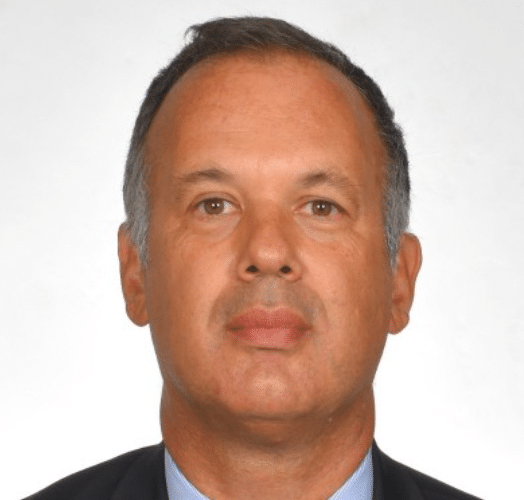
Miguel Crespo, Economic and Trade Counsellor to India and Director at AICEP Portugal Global (the Portuguese Trade & Investment Agency) speaks to HARSHVARDHAN BHATKULY on the relationship between the two countries and business in Goa
You have been in India for two years. What has been the focus of your work during this period?
I have been posted to India for two years now as the Economic Counsellor at the Embassy of Portugal, while also representing AICEP, the Portuguese Trade and Investment Agency, in Western India. My focus is to bring the two countries closer through economic relations.
Portugal is, by definition, a globalist country. I know globalisation is being questioned today, with barriers, tariffs and other restrictions, but openness has been part of Portugal’s history from the beginning. We have never believed that everything has to be produced in Portugal; by definition we are traders.
That is why Portugal championed the India-EU Free Trade Agreement very strongly. We are very happy that it has happened, even though Portugal itself has some labour-intensive industries, such as footwear and textiles, which could face competition from Indian companies. But there is always room for everyone to specialise in niches, move up the value chain and create combinations between the two cultures and markets.
What has been the current scale of trade between Portugal and India, and where do you see room for further growth?
Trade is still limited, although it is growing at a healthy rate. Portugal’s exports to India in goods and services are expected to reach around €300 million in 2026, growing at approximately 10%, despite the adverse currency effect caused by the depreciation of the rupee. India exports roughly three times as much to Portugal, at around €1 billion.
In both directions, trade is still concentrated largely in commodities, so there is considerable scope to add value. India is a very price-sensitive market, but that also means companies need to look at how they can differentiate themselves and move beyond simply selling products.
Portugal exports forest-derived products to India, for example. Portugal is a major global player in paper and products and chemicals derived from forestry, while India does not have the same level of industry in this area. This accounts for around one-third of our exports to India.
Capital goods are another important category, accounting for around 30% of what we export. Some of these products also demonstrate how integrated the European economy is. Machinery arriving in India from Sweden or the Netherlands, for instance, may contain components that were manufactured, assembled or integrated in Portugal.
Your recent visit to Goa appears to have been particularly focused on companies that are looking beyond the domestic market. What were you looking for?
There were two dimensions to my visit. One was very specifically focused on companies headquartered in Goa; decision centres that are expanding and becoming international. Understanding their strategy, their strengths and their expectations was high on my agenda.
I visited what I consider some of the prominent companies, including Kineco and Power Engineering; and also looked at sectors where there are common interests, particularly the blue economy and shipyards.
My assignment is to foster a closer economic relationship between Portugal and India, hopefully through Goa. Companies are run by people, and it is ultimately about talent. Goa has a lot of talent, and we would also like to see more people from Goa working with Portuguese companies, working in Portugal and succeeding in Europe from Portugal.
How do you see AICEP helping companies from Goa and Portugal connect with each other?
I see my role as connecting the dots. If we can approach the decision-maker directly, so much the better. Portugal is a market economy without state intervention in business. A Goan entrepreneur should know that he is welcome and that he will not receive different treatment from a Portuguese.
My role is to understand a company’s business strategy and immediate steps, put the options on the table and help it network with potential clients, partners and other players.
The same applies in the other direction. We look at Portuguese companies that are clearly considering international expansion and explain that India could be an anchor point.
I am deliberately prudent about telling companies that a particular city or player is the answer. It is for the companies themselves to decide. I connect the opportunities and the people, and then the companies make their decisions.

What should determine whether a Goan company is ready to consider Portugal and Europe?
The critical filter is international experience. In the same way that I would not suggest India or Goa as the first international market for a Portuguese company that has never done business outside Portugal, I would look at the experience of an Indian or Goan company.
If a company from Goa is already present in Maharashtra, Tamil Nadu and other parts of India and has reached across the country, perhaps it is time to consider Europe.
And when considering Europe, Portugal has several natural advantages. There are similarities in the size of companies and in the way entrepreneurs operate and build relationships. I increasingly feel that when we deal with people, the cultural connection is very important.
For a company that is ready to go abroad, Portugal is a stable and reliable economy where it can test the European market and then potentially roll out into Europe. That is very much what we are focused on.
Partnerships seem to be an important part of the model you envisage. Why is that particularly relevant in India?
It is difficult to imagine a Portuguese company coming to India and building everything from scratch without a local partner. The two sides should bring together their skills and strengths and create a formula that works.
The big international players in India have often followed this approach. Starbucks, for example, operates with Tata. So why should a Portuguese company necessarily come here alone?
I would like to see this happen at the level and scale of Goa, particularly in sectors where Goa is already strong.
Which sectors do you see as having the greatest potential between Goa and Portugal?
Tourism and hospitality immediately come to mind. Both Goa and Portugal have developed these sectors strongly, and that says something about the nature of their people – welcoming, culturally rich and with a particular way of enjoying life.
Hospitality is extremely important in both places. There are opportunities not only in hotel operations but also in software and management solutions for hotels.
Education is another area. The V.M. Salgaocar Institute of of International Hospitality (VMSIIHE) has a protocol with the Turismo de Portugal, and there is scope to deepen the exchange of skills and experiences around tourism.
Gastronomy is also an obvious opportunity. Goa and Portugal have deep connections in food, and I was surprised not to find more Portuguese restaurants in Goa. People frequently ask about bacalhau, for example.
There could be an opportunity for a Goan food distributor to bring excellent Portuguese products into Goa and, using the advantages of a more integrated Indian market, introduce and distribute them across the country.
Could Portugal also become a gateway for Goan and Indian companies entering Europe?
Absolutely. Portugal can provide a platform into Europe, but also into other markets where it has strong connections.
Healthcare and life sciences are areas where I see potential. Portugal has good companies across the life sciences sector, from pharmaceuticals to clinics. There are also opportunities in diagnostics and distribution.
Portugal’s connections with Africa are another advantage. Portuguese companies can help Indian businesses access Europe through the appropriate certifications and can also provide connections into Portuguese-speaking African markets.
I visited Molbio in Goa, and I believe there is a fit with Portugal on several different levels.
Are there opportunities in more traditional industries as well?
Certainly. One area I would like to see develop is food processing, particularly fisheries.
Portugal is strongly associated with everything related to the sea, and Portuguese companies are prominent in fish processing. Interestingly, over the last five years, Portugal has gone from almost nothing to importing around US$40–50 million worth of fish from India. That fish is then processed, packaged and sometimes turned into ready-made food for export across Europe.
The question is: if we already know the Indian suppliers, why not bring Portuguese expertise into India and use that experience to serve the Indian market with high-quality, innovative products?
The next 20 years in India will bring improvements in cold-chain infrastructure and changes in consumer habits. That will create opportunities.
I could also see Portuguese companies in perishables and non-perishables establishing operations in India, potentially in Goa, and working with local partners.
What role do you see Goa playing in the wider Portugal-India relationship?
Goa has a very significant position because of its economic strengths, its people and its historical and cultural connections with Portugal. But I would not want to reduce the relationship to history alone. The future has to be based on business, talent, skills and complementary strengths.
If Goa’s companies are ready to globalise, Portugal can be one of the places they consider as they enter Europe. At the same time, Portugal has companies looking for international opportunities, and Goa can offer them a strong local partner and an entry point into India.
The opportunity is to connect those two sides. Ultimately, that is what I see my role as being: connecting the dots between companies, people, markets and opportunities, and allowing the businesses themselves to decide how they want to build those relationships.