



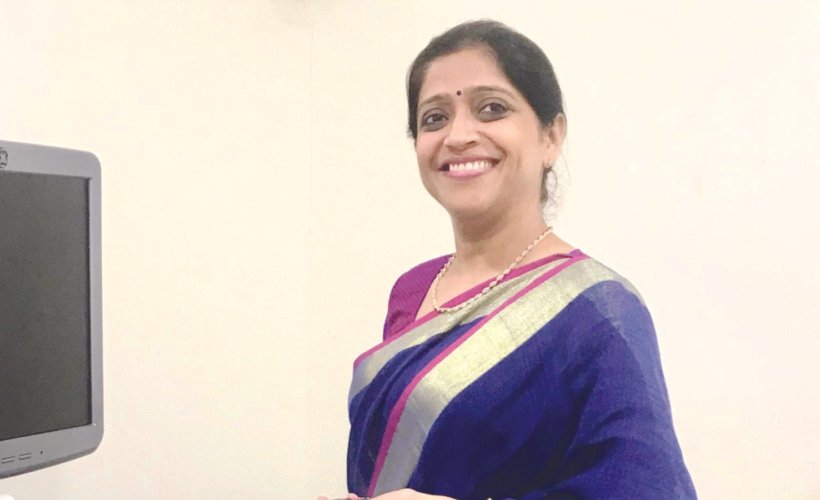
From zero-distraction student days to 27+ years on healthcare’s frontlines, Dr Bijal Rane speaks on her journey in radiology
In an era dominated by rapid technological leaps, constant connectivity, and instantaneous results, Dr Bijal Rane stands as a beacon of grounded expertise and unwavering clinical dedication. With over 27 years of experience in diagnostic radiology and medical imaging, her journey reflects both the evolution of modern medicine in Goa and the enduring importance of empathy at the bedside.
Reflecting on her early years and education in Goa, Dr Rane attributes much of her foundational resilience to a simpler time; one untouched by the digital noise of today.
“We had no distractions, in fact zero distractions,” Dr Rane recalls. “The options back then were limited: after 12th grade, you either chose medicine, dentistry, or engineering, and those who didn’t get into these would pursue a B.Sc. There was no social media, AI, Google, or even a mobile phone until I bought one with my own salary in 2001. We just worked hard at our studies, and that lack of distraction shaped my entire foundation.”
Her path to medicine was driven by a childhood dream that began at age five. While she initially envisioned a career in ophthalmology and later leaned toward pediatrics during her MBBS, fate had a different trajectory in store.
“It sounds like a movie plot, but serendipity handed me radiology in 1999,” she smiles. “Back then, I had no idea where radiology would take me or what it would do for me. Looking back today, I feel profoundly blessed.”
Over her nearly three-decade career, Dr Rane has witnessed a dramatic shift in diagnostic capabilities. When she began her practice, a single-slice CT scan of the brain took roughly 22 minutes; today, advanced 256-and 512-slice scanners complete the same study in 20 seconds with significantly reduced radiation through collimated cone beams.
While artificial intelligence continues to automate cross-sectional imaging, Dr Rane firmly believes that technology can never replace the essential doctor-patient connection, particularly in ultrasound care.
“AI may handle CT and MRI reporting on high-definition monitors where there is no direct patient interaction, but ultrasound is entirely different,” Dr Rane emphasizes. “When a patient lies on that bed, they are deeply anxious. When I scan an expectant mother, she watches my face. If I look dull or concerned, she immediately worries. I always put myself in the patient’s position on that bed. Turning the monitor to show a mother her baby’s heartbeat provides a reassurance that no algorithm can replicate. That human touch is non-negotiable.”
Advances in high-risk obstetric diagnostics have revolutionized patient outcomes under Dr Rane’s care. Through modern obstetric Doppler studies, radiologists can now measure blood flow across three critical points: from mother to placenta, through the umbilical cord, and into the fetal brain.
“These parameters have rendered perinatal mortality almost negligible in our practice,” she explains. “We can detect reduced oxygenation or compromised blood flow very early. Even if a baby weighs under two kilograms, we can guide the obstetrician to perform a timely delivery, preventing long-term neurological complications like cerebral palsy. We give the values, the obstetrician acts, and the baby thrives.”
Similarly, in complex vascular diagnostics, push-button colour Doppler technology allows clinicians to identify deep vein thrombosis (DVT) before a total blockage occurs by spotting subtle drops in flow velocity.
Often referred to as the engine room of hospital diagnostics, radiology functions best within a collaborative, multi-disciplinary framework. Having practiced across major institutions like Manipal Hospital as well as specialized imaging centers in Goa, Dr Rane highlights the value of integrated care.
“Institutional practice allows us to work as a cohesive team; radiologists, interventional radiologists, oncologists, and surgeons coming together to map out a precise treatment strategy,” she notes. “Take a simple condition like appendicitis; the appendix can sit in six or seven different anatomical positions. Using ultrasound or CT, we pinpoint the exact location for the surgeon, allowing them to perform a keyhole laparoscopic appendectomy with absolute precision.”
Behind the high-tech machinery lies a demanding profession that requires unconditional commitment and solid personal support.
“In radiology, emergency calls are constant. I take emergency calls all the time,” Dr Rane shares candidly. “If not for my family; my mother, my husband, my two beautiful daughters, my mother-in-law, and my house help, I couldn’t sustain this career. In medicine, availability is your greatest tool. Being there at the exact moment a patient needs you; that’s where you truly make a difference.”
Addressing the next generation of medical aspirants amidst a changing healthcare landscape, Dr Rane offers an unvarnished perspective on the realities of the profession.
“Medicine today requires complete selflessness,” she advises. “Expectations are high, patients and relatives are increasingly anxious, and the journey from MBBS to NEET PG is a continuous struggle. I tell young aspirants, only enter medicine if you are genuinely ready to make that sacrifice and give yourself entirely to the field. Clarity of purpose is everything”