



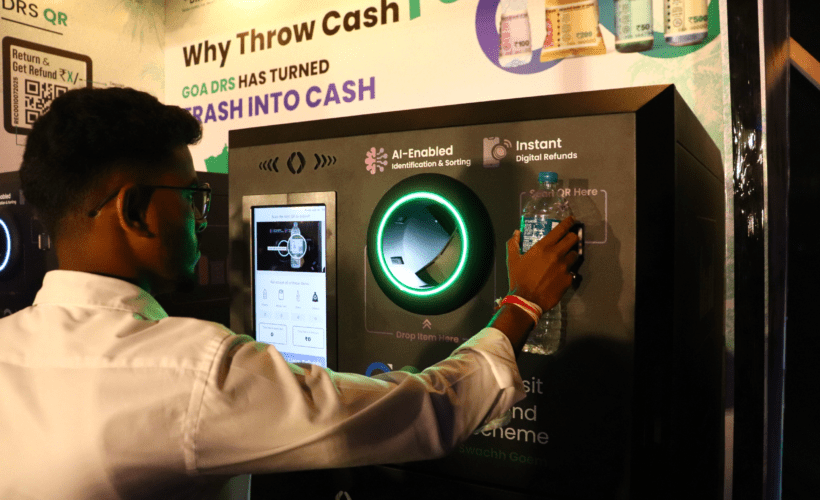
Goa’s pioneering Deposit Refund Scheme harmonizes producer responsibility with instant digital incentives for sustainable beverage packaging
As India accelerates its transition toward circular economy solutions, Goa is emerging as a pioneer with South Asia’s first digitally enabled Deposit Refund Scheme (DRS) for non-biodegradable packaging. Managed under the Goa Non-Biodegradable Garbage (Control) Act by the Department of Environment and Climate Change, the initiative targets the growing burden of glass bottles, PET plastic, aluminum cans, and multi-layered packaging that threatens the state’s delicate coastal ecosystem. Positioned as a potential blueprint for the rest of the nation, Goa’s model bridges the gap between state-level environmental policy, brand accountability, consumer behaviour, and informal waste collection through a unified digital architecture.
Architectural Framework and Digital Innovation
At the heart of Goa’s Deposit Refund Scheme is a seamless, closed-loop consumer model designed to eliminate cash-handling friction and prevent fraud. When consumers purchase a covered beverage, a small, fully refundable deposit is added to the Maximum Retail Price, ranging from two rupees for small items up to ten rupees for alcoholic glass bottles. Every eligible container features a unique, serialized QR code printed directly on its packaging label, establishing digital traceability from production to final recycling. To reclaim their deposit, consumers drop empty containers at Reverse Vending Machines or authorized manual collection points. Scanning the QR code instantly verifies the item and transfers the deposit directly to the user’s bank account via Unified Payments Interface, ensuring a transparent data trail for every container sold in the state.
Strengthening EPR Compliance and Recycler Quality
A major structural objective of the scheme, as outlined by Scheme Administrator Committee Chairman Anthony D’Sa, is to resolve long-standing limitations within India’s Extended Producer Responsibility framework. Under national rules, brand owners frequently meet recovery targets by purchasing offset certificates from recyclers in other states, leaving tourist hotspots like Goa with unmanaged local litter and zero dedicated recovery funding. Goa’s DRS framework directly tackles this imbalance by requiring packaging to be tracked specifically within the Goan market, with verified recovery data integrated directly into Central Pollution Control Board portals. Furthermore, by capturing clean, source-segregated material through direct consumer and collector returns, the scheme supplies recyclers with high-purity, uncontaminated feedstock. This improves structural homogeneity, allowing processing plants to generate higher-value recycled outputs with significantly lower energy expenditure.
Formalising the Informal Waste Sector
Beyond its environmental and technological goals, the Deposit Refund Scheme acts as a powerful vehicle for social and economic inclusion.
Traditionally, Goa’s informal waste pickers and scrap dealers relied on volatile bulk rates, earning negligible amounts when selling packaging by weight. Under the DRS, return values are fixed per unit to the higher deposit rate, allowing collectors to earn substantially more for the same volume of collected material. Furthermore, the scheme establishes a registration framework linking waste pickers and local scrap networks through Aadhaar identities and bank accounts. This integration formalizes their position in the state’s circular economy, converting informal workers into recognized logistics partners within the broader municipal waste architecture.
Strategic Rollout, Glass Pilot, and Ground Readiness
While the initial regulatory notification generated significant expectations, Chief Minister Dr Pramod Sawant clarified during a Legislative Assembly address that the state is undertaking a deliberate, phased implementation strategy. The government has dedicated an awareness and consultation phase spanning six months to a year before enforcing mandatory full-scale operations. To ensure operational stability, the rollout begins with a pilot program focused exclusively on glass bottles; supported by participation from the state’s excise and liquor sectors; before expanding to PET plastic, cans, and flexible packaging. Infrastructure deployment is moving steadily in parallel, with over one hundred thirty village panchayats issuing location approvals, hundreds of Reverse Vending Machines arriving for installation, and public demonstrations being conducted at major transit hubs to familiarize citizens with the refund technology.
Industry Concerns and Practical Challenges
Despite widespread support for the scheme’s vision, local business leaders and waste management associations have raised practical implementation concerns. Manguirish Pai Raiker, former President of the Goa Chamber of Commerce, highlighted that in a heavily tourist-driven economy, transient visitors may lack the incentive or convenience to return packaging before exiting the state, necessitating a dense and easily accessible network of return hubs. Additionally, Clinton Vaz, President of the Goa Waste Management Association, noted that beverage packaging accounts for only a small fraction of total roadside garbage, suggesting that supplementary measures are required for non-beverage streams. Industry stakeholders also continue to evaluate the financial mechanics of scaling reverse logistics and ensuring that automated vending centers complement rather than displace traditional waste pickers. Goa’s Deposit Refund Scheme represents a bold step forward in India’s approach to plastic pollution and brand accountability. By combining serialized digital tracking, instant mobile payments, and structured inclusion of the informal waste sector, the initiative offers a practical strategy for aligning consumer incentives with environmental preservation. If successful, Goa’s experience will provide invaluable insights for other Indian states seeking to build scalable, digitally integrated circular economies