



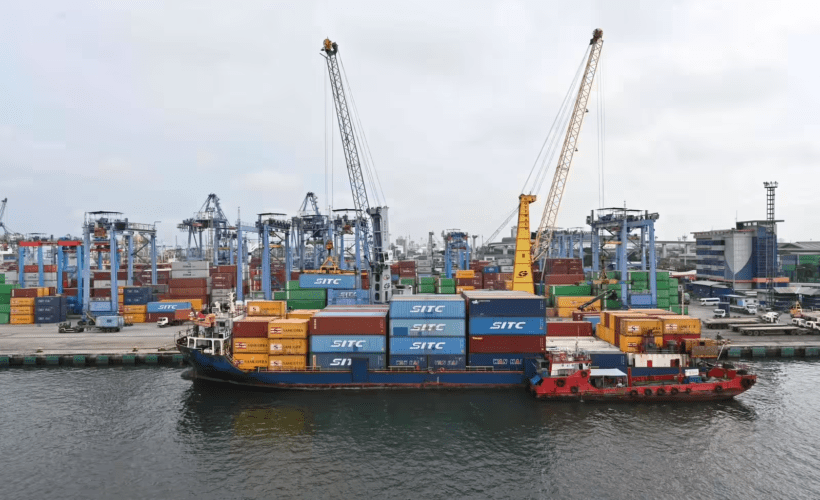
Container shipping returns to Mormugao promising cheaper logistics, greener trade, and renewed global connectivity for Goa’s exporters
After a seven-year lull, Goa’s is set to re-emerge as a vital gateway in India’s maritime trade. Once a bustling centre for container operations, the port has remained dormant since 2018, compelling exporters to depend on costly road transport to Mumbai’s Jawaharlal Nehru Port (Nhava Sheva). Now, with the return of container services later this November, the Mormugao Port is poised to reconnect Goa’s industries with the global shipping network. The revival marks not just an operational milestone, but also a symbolic resurgence for a port that once played a key role in regional trade logistics.
After years of negotiations and planning, the Shipping Corporation of India (SCI) has been finalised as the feeder vessel operator to restart container operations from Mormugao. According to port officials, SCI’s vessel SCI Mumbai will make its maiden call to the port on 20th November, officially ending the long hiatus.
“This is a huge breakthrough after years of persistent follow-ups with various feeder operators and shipping lines,” said Vishnu Prasad, Senior Business Development Manager at Delta Ports (Mormugao Terminal Pvt Ltd). “The arrival of the first container ship marks a big day for Goa’s industries and exporters alike.”
The development has generated cautious optimism within Goa’s trade community, which has long called for the reinstatement of direct container services to reduce logistics costs and enhance global competitiveness.
Since 2018, when the last container ship docked at Mormugao, exporters have been forced to transport goods by road to Mumbai, a journey that significantly inflated costs and delivery times.
“Transporting a dry container by road cost around `80,000, while a reefer container for perishables could cost close to `1 lakh,” explained Prasad. “By shifting to sea transport, exporters can save up to 60 per cent of that amount.”
Beyond cost efficiency, the new service promises faster, more reliable, and environmentally sustainable logistics. The sea voyage from Goa to Mundra Port in Gujarat, India’s largest container terminal, takes just two days. By contrast, road shipments can require two to three weeks of advance coordination and face delays caused by fuel price hikes, traffic congestion, and bureaucratic red tape.
“This service doesn’t just save time and money, it helps the environment,” Prasad added. “By moving containers by sea rather than by truck, we can dramatically cut carbon emissions, aligning Goa’s logistics operations with global sustainability goals.”
Gateway to Global Markets
Once SCI Mumbai departs from Mormugao, it will directly connect with Mundra Port, which serves as a major hub linking India to Europe, the Middle East, and the Americas. From Mundra, Goa’s exports will enjoy access to some of the world’s busiest maritime trade routes.
“This connectivity opens up enormous opportunities for Goan exporters, especially in pharmaceuticals, seafood, and manufacturing,” Prasad noted. “Previously, exporters had to wait until their shipments reached Mumbai to receive the Bill of Lading. Now, documentation will be processed directly at Goa, saving both time and administrative effort.”
Delta Ports has set its sights on positioning Mormugao Port as a permanent feature in India’s container trade network. “Our goal is to ensure that Mormugao Port reclaims its rightful place as a vital logistics link. Goa’s trade sector has always deserved direct sea connectivity, and now it’s back,” Prasad affirmed.
The first voyage of SCI Mumbai will be relatively small in scale, carrying an estimated 25 to 30 containers of coastal cargo arriving from Kandla Port. Nevertheless, Delta Ports expects volumes to increase significantly in the coming months.
“We anticipate a steady rise in cargo as the service stabilises,” Prasad explained. “From Goa, we expect exports such as seafood, pharmaceutical products, and manufactured goods to move to Mundra, while imports will include tiles, fertilisers, industrial salt, wheat, and bentonite clay.”
The pharmaceutical sector, in particular, is expected to drive growth. “We’re projecting around 250 containers from the pharma industry per voyage once operations reach full capacity,” Prasad added, underlining the port’s potential to become a major contributor to the regional economy.
Future Plans
If the service performs well, SCI plans to expand its fleet at Mormugao. The SCI Mumbai, a vessel with a deadweight of 50,000 tonnes and capacity for 4,000 containers, will initially call every ten days. However, Delta Ports intends to introduce a second vessel, SCI Chennai, to increase frequency to a weekly schedule.
“Once cargo volumes stabilise, SCI Chennai will join the service, giving exporters more flexibility,” said Prasad. “We’re also in discussions with major international shipping companies such as Maersk, CMA CGM, MSC, Hapag-Lloyd, and Ocean Network Express (ONE). Now that SCI has taken the lead, we’re confident others will follow.”
The resumption of container operations is the result of Delta Ports’ years-long campaign to convince feeder operators that Goa was ready to re-enter the container trade. Many shipping lines were initially reluctant, citing concerns over insufficient export volumes.
“We have been pursuing this for years,” Prasad revealed. “Several shipping lines were sceptical about Goa’s cargo potential, so we had to demonstrate that local trade volumes justified the service.” Delta Ports’ efforts included multiple visits to SCI’s management and numerous trade consultations to secure support from both shipping companies and exporters. “This revival didn’t happen overnight, it’s the product of collaboration, persistence, and confidence-building across the trade community,” Prasad said.
Container operations will take place at Berths 10 and 11 of Mormugao Port.
Delta Ports will manage the handling operations, while the Mormugao Port Authority will oversee marine logistics suchas berthing, unberthing, and
navigation. “The coordination between MPA and Delta Ports has been exemplary,” Prasad commented. “Once operations begin, we will organise trade meetings to gather feedback and address operational
challenges swiftly.” MOUs to be signed during
Maritime Week Mormugao Port Authority’s revival efforts extend beyond container shipping. The port is preparing to sign multiple Memoranda of Understanding (MoUs) worth approximately `300 billion during the
upcoming Maritime Week. These agreements aim to boost investment in logistics, port modernisation, and renewable energy projects. Officials indicated that the MoUs will prioritise coastal infrastructure development, improved cargo handling, and sustainability initiatives under the Sagarmala Programme. The port is also keen to attract private participation to create greener and smarter port facilities, positioning Goa as a forward-looking maritime hub.
Smooth Sailing
The return of container services to Mormugao Port marks a turning point for Goa’s maritime and industrial sectors. Beyond reducing costs and transit times, the revival reconnects Goa with the global supply chain; strengthening
its position as a strategic trade gateway on India’s western coast. With sustainable operations, ambitious expansion plans, and strong coordination between Delta Ports and the Mormugao Port Authority, this comeback could well transform Goa into a model of modern, eco-friendly maritime logistics. The long wait for containers to sail once again from Mormugao is finally over, and the future looks brighter than ever.